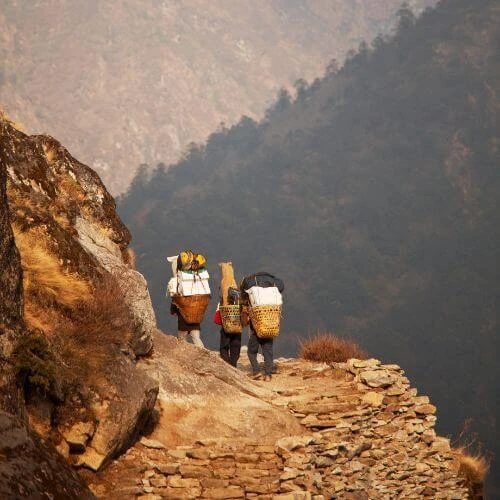
Nepal is one of the best travel destinations in Asia and, honestly, one of the best decisions you'll make. It's not just for hardcore trekkers or spiritual seekers. Nepal is one of those rare places where you can show up, not know anyone, and still feel completely at home within a day or two. The locals are genuinely warm, the food is cheap, the scenery is unreal, and there's enough variety to keep any kind of traveler busy for weeks.
Whether you're chasing mountain views, ancient temples, jungle wildlife, or just a quiet café with good coffee, Nepal has it. And the freedom here is unmatched.
This travel guide, Nepal, covers the top 10 travel destinations in Nepal, plus honest tips to help you travel smarter, safer, and without burning through your budget.
Is Nepal Safe for Travelers?
Let's get this out of the way first because it's probably one of the first things you Googled. Yes, Nepal is generally safe for travelers and families alike. Locals are welcoming and used to seeing tourists exploring on their own. Tourist areas are well-traveled, guesthouses are used to hosting guests, and the trekking culture makes it easy to connect with other travelers if you don't want to be completely alone.
That said, use common sense. Stick to established routes, especially if you're new to high-altitude trekking. Use regulated transport apps. Tell your guesthouse where you're going. The usual stuff. As of 2026, ride-sharing apps like Pathao and InDrive are fully regulated and far more reliable than flagging down unmetered taxis, especially in Kathmandu. Use them.
Ready to explore Nepal’s top destinations in 2026? Let Abound Holidays plan your trip so you can travel stress-free.”
Top 10 Travel Destinations in Nepal
Nepal has something for every kind of traveler: mountain views, ancient temples, dense jungle, and remote wilderness. These are the best travel destinations in Nepal worth visiting in 2026, whether you're here for a week or a month.
1. Pokhara: The Best Base for Travelers
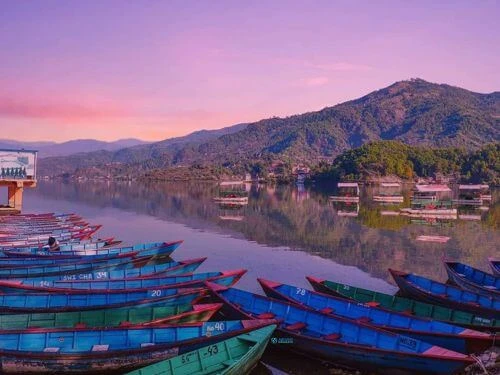
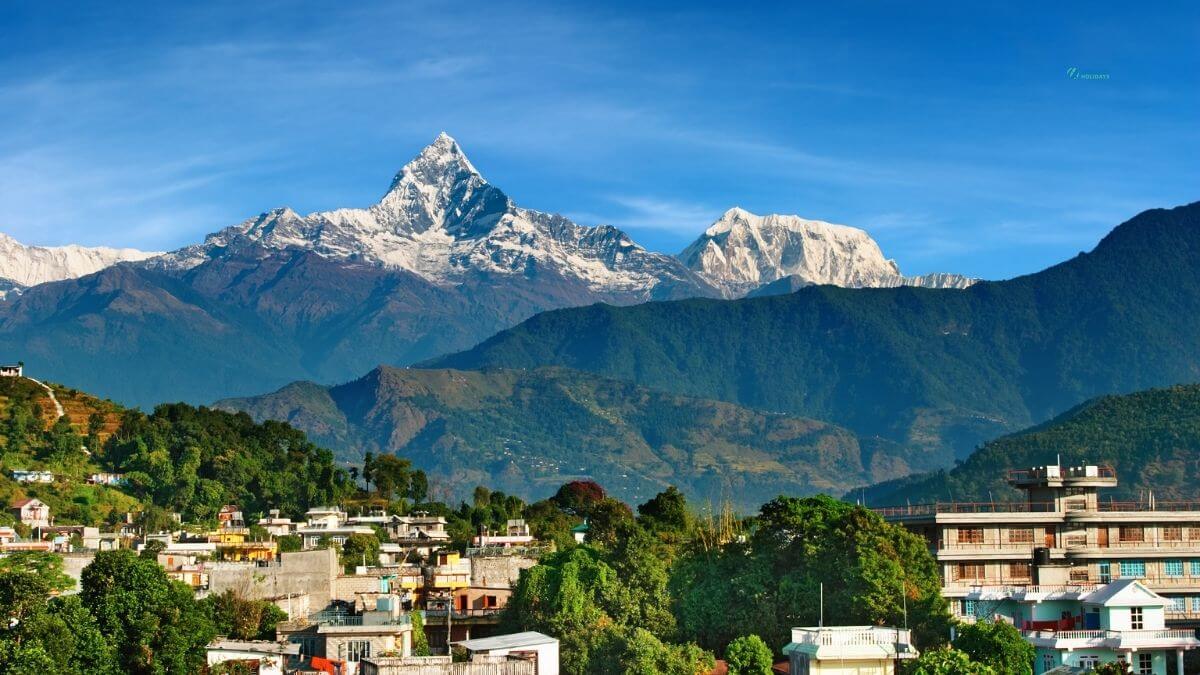
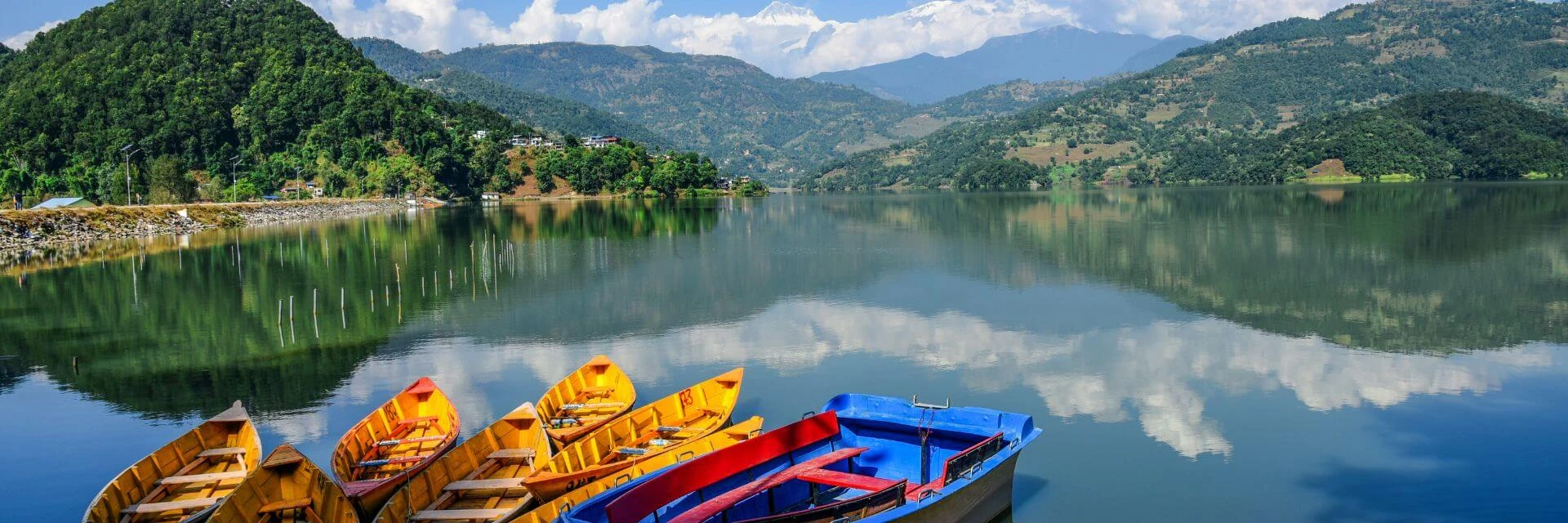
If there's one city practically built for travel, it's Pokhara. Lakeside is relaxed, safe, and full of cafés and fellow travelers. Sit by Phewa Lake in the morning, paraglide by noon, and catch a sunset boat ride by evening all on your own schedule. Sarangkot nearby gives jaw-dropping Annapurna sunrise views. Worth the early alarm.
Things to do alone in Pokhara:
- Paragliding from Sarangkot
- Boating on Phewa Lake
- Yoga classes around Lakeside
- Hiking to the World Peace Pagoda
- Exploring Davis Falls and Gupteshwor Cave
Budget tip: Eat one lane back from the main lakeside strip; same quality, way cheaper.
2. Kathmandu Valley: Culture, Chaos, and Character
Kathmandu hits you all at once: incense, motorbikes, and temples around every corner. A lot, but in a good way. Thamel is the obvious starting point for travelers. After a few days, wander to Kathmandu Durbar Square early in the morning, walk the ghats at Pashupatinath, and explore Boudhanath Stupa. For quieter evenings, Lazimpat is calmer than the backpacker strip, with more local restaurants and fewer touts.
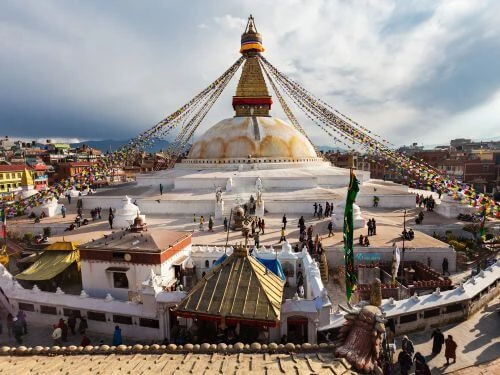
Boudhanath Stupa is one of the largest Buddhist stupas in the world and a UNESCO World Heritage Site. The circular kora (walking path) around it is lined with prayer wheels, butter lamp shrines, and monasteries, best done at dawn or dusk when the resident monks and Tibetan community are most active. The rings of butter lamps lit in the evening make it one of the most atmospheric spots in the entire country.
Pashupatinath Temple, on the banks of the Bagmati River, is one of Hinduism's most sacred sites dedicated to Lord Shiva. Non-Hindus cannot enter the main temple but can walk the ghats and observe cremation ceremonies from the opposite bank, a profound, sobering, and deeply human experience that most travelers say stays with them long after they leave. Morning hours are the most active.
Swayambhunath (commonly called the Monkey Temple) sits on a hilltop west of the city and offers some of the best panoramic views of the Kathmandu Valley. The 365 stone steps up to the top are lined with prayer flags, carved Buddhas, and yes, resident monkeys. Allow a full morning.
Kathmandu Durbar Square is a complex of palaces, courtyards, and temples built between the 12th and 18th centuries. It was significantly damaged in the 2015 earthquake, and restoration is ongoing, but what remains is still extraordinary. The Kumari Ghar, home to the living goddess Kumari, is here, and you may catch a brief appearance from the palace window.
Top tourist places in Nepal for travelers in Kathmandu:
- Boudhanath Stupa (UNESCO World Heritage Site)
- Swayambhunath (Monkey Temple): hilltop views across the valley
- Pashupatinath Temple: sacred Hindu site on the Bagmati River
- Kathmandu Durbar Square: 12th–18th century palace complex
- Garden of Dreams: a restored Neoclassical garden, ideal for an afternoon break
- Asan Bazaar: the oldest market area in the city, great for spices, thangkas, and local life
Practical tip: The Kathmandu Valley has 7 UNESCO World Heritage Sites in total, all within easy day-trip distance. An entry fee of around $15 covers Kathmandu Durbar Square; Patan and Bhaktapur charge separately.
3. Chitwan National Park: Wildlife and Jungle Vibes
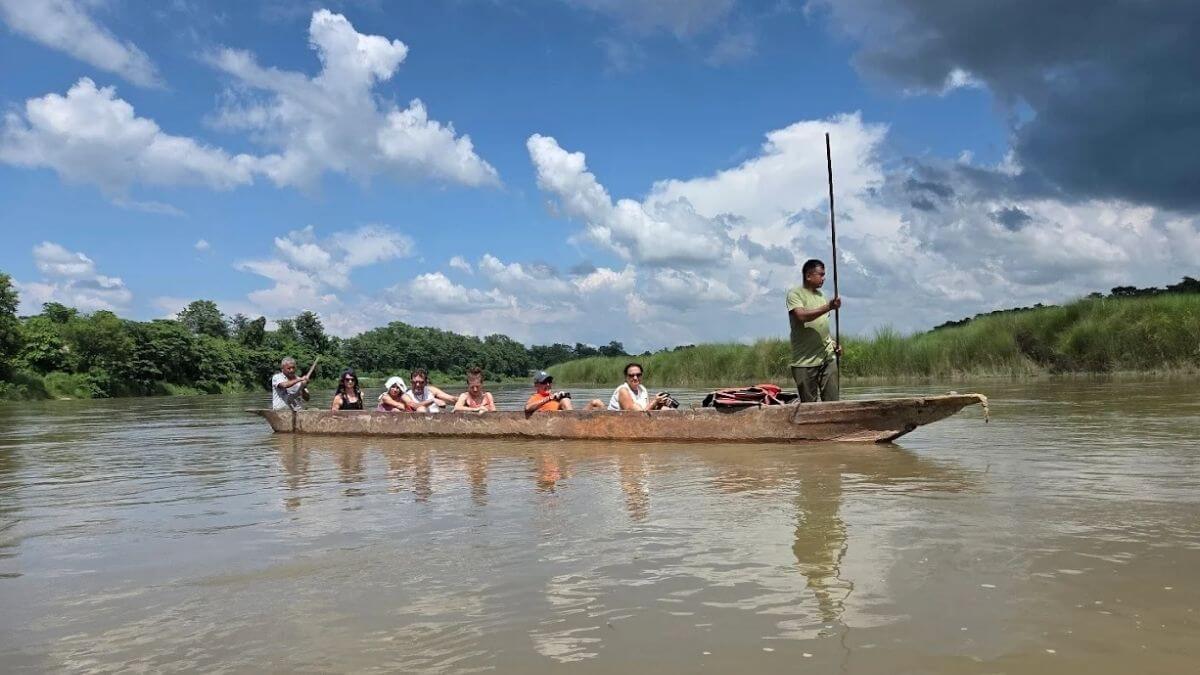
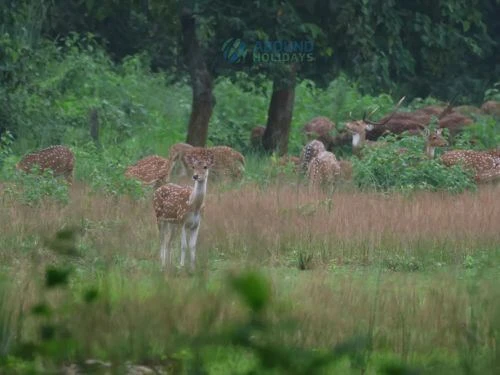
Chitwan National Park is pure jungle: no mountains, no temples, just dense jungle and exciting South Asian wildlife. One of the best places for travel in Nepal if you want a break from trekking. A UNESCO World Heritage Site, Chitwan is home to over 700 one-horned rhinoceroses, one of the largest populations in Asia, as well as Bengal tigers, gharial crocodiles, sloth bears, and wild elephants. The park also boasts over 500 bird species, making it a serious draw for birdwatchers. Sightings are not guaranteed, but rhino encounters on jeep safaris are genuinely common.
Safari activities are guided and group-friendly, so you're never awkwardly alone. Jeep safaris, canoe rides on the Rapti River, birdwatching, and Tharu village walks are all easy to join from guesthouses in Sauraha. Budget $30–60 per day depending on your safari package.
What you can do here:
- Jeep safaris into the core jungle area
- Canoe rides on the Rapti River
- Elephant observation (not rides; ethical elephant sanctuaries focus on observation now)
- Birdwatching (Chitwan has over 500 species)
- Cultural Tharu village walks
The Tharu people are the indigenous community of the Terai lowlands and have lived in the region for centuries. Tharu cultural programs, traditional stick dances, village homestays, and cooking demonstrations add a meaningful cultural layer to what would otherwise be a purely wildlife-focused trip.
Getting there: Buses and tourist coaches run directly from Kathmandu and Pokhara to Sauraha (the main gateway town). The journey from Kathmandu takes roughly 5–6 hours. Most guesthouses can arrange safari packages on arrival, though booking ahead in peak season (October–November) is advisable.
4. Nagarkot: Peaceful Hilltop Views
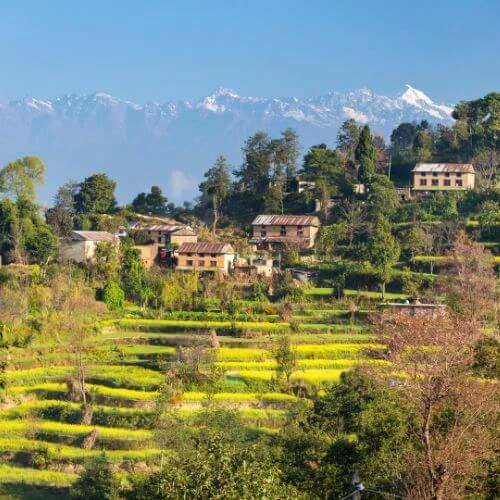
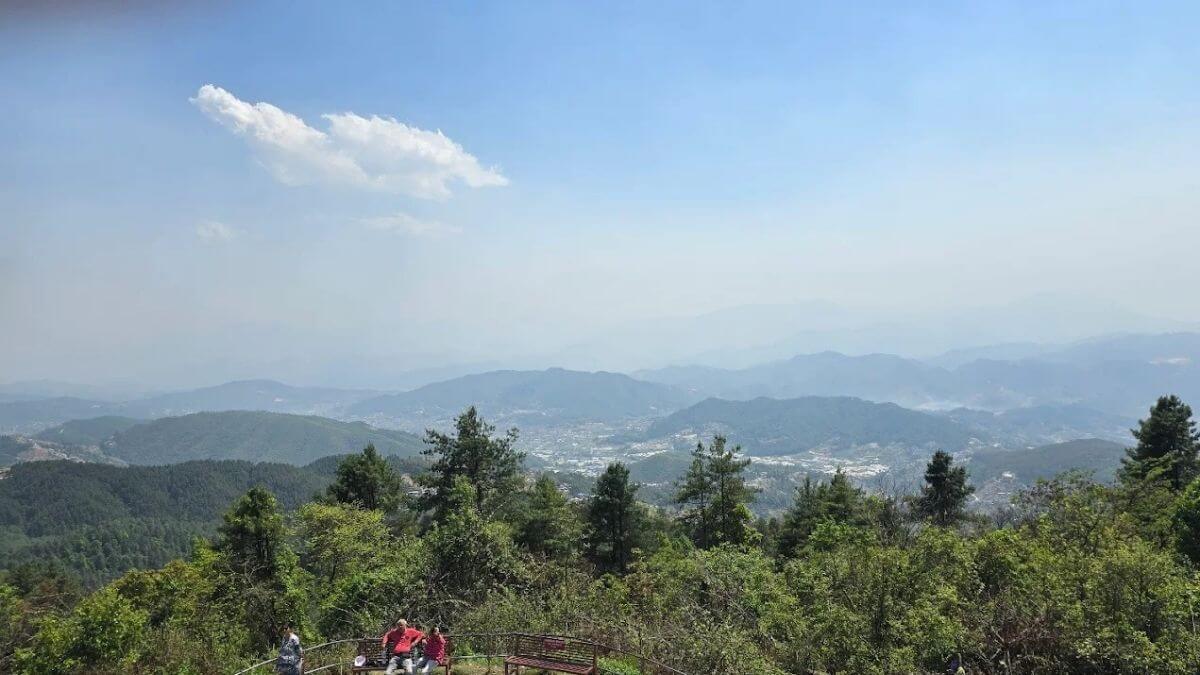
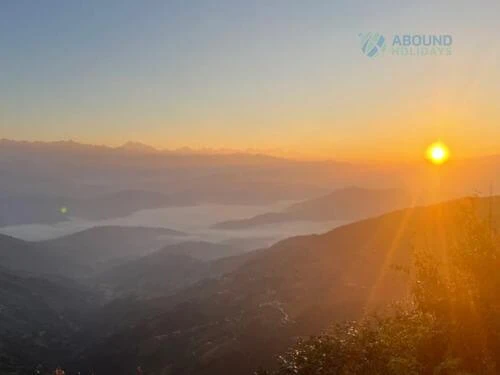
Nagarkot is basically a reset button for travelers tired of city noise. A small hilltop town 30 km east of Kathmandu at 2,175 meters, it offers some of the widest panoramic Himalayan views accessible from the valley; on a clear day, the visible range stretches from Dhaulagiri in the west to Kanchenjunga in the east, with Everest visible in the right conditions. Not much to do here, and that's the point. Walk the ridgeline, sit with a hot drink, and watch the mountains. One or two nights is plenty and genuinely restorative.
The sunrise from Nagarkot is the main event. Most guesthouses will wake you early for it. The best views come in October–November and February–March, when the air is clearest. December and January can be cold and occasionally foggy, though the snow on the peaks compensates. From Nagarkot you can walk or hire a local jeep down to Bhaktapur (about 12 km), making it an easy two-in-one day trip from Kathmandu. Some travelers do the Nagarkot to Changunarayan hike, a pleasant 3–4 hour trail through forest and terraced farmland that ends at one of Nepal's oldest Hindu temples, another UNESCO site.
Getting there: Local buses run from Bhaktapur to Nagarkot (around 1 hour, under $1). From Kathmandu, taxis take about 1.5 hours and cost $15–20 one way. Many guesthouses in Thamel can also arrange shared transport.
5. Bandipur: Nepal's Best Kept Secret
Bandipur is one of those places most tourists zoom past between Kathmandu and Pokhara. It's a beautifully preserved Newari hilltop village with a car-free old town, stone-paved streets, panoramic mountain views, and zero crowds. For travelers wanting something off the usual path, this is it. Book accommodation ahead in peak season (October–November).
The old town of Bandipur was a thriving trading hub on the India-Tibet route until a road bypassed it in the 1970s, which inadvertently preserved it almost entirely intact. The result is one of the best-preserved examples of traditional Newari architecture in Nepal, without the tourist infrastructure (or entry fees) of Bhaktapur. The mountain views from Tundikhel, the open grassland at the center of town, are exceptional. On clear mornings the Annapurna and Manaslu ranges are fully visible, often with very few other people around.
Things to do in Bandipur alone:
- Siddha Gupha cave trail (one of the largest caves in Nepal, ~30 min walk from town)
- Tundikhel viewpoint for sunrise mountain views
- Bindabasini Temple morning hike
- Wandering the bazaar streets and visiting local shops
- Day hike to Ramkot village for valley views
It works well as a half-day stop or a full overnight between Kathmandu and Pokhara. The drive off the Prithvi Highway into town takes about 20 minutes on a winding road.
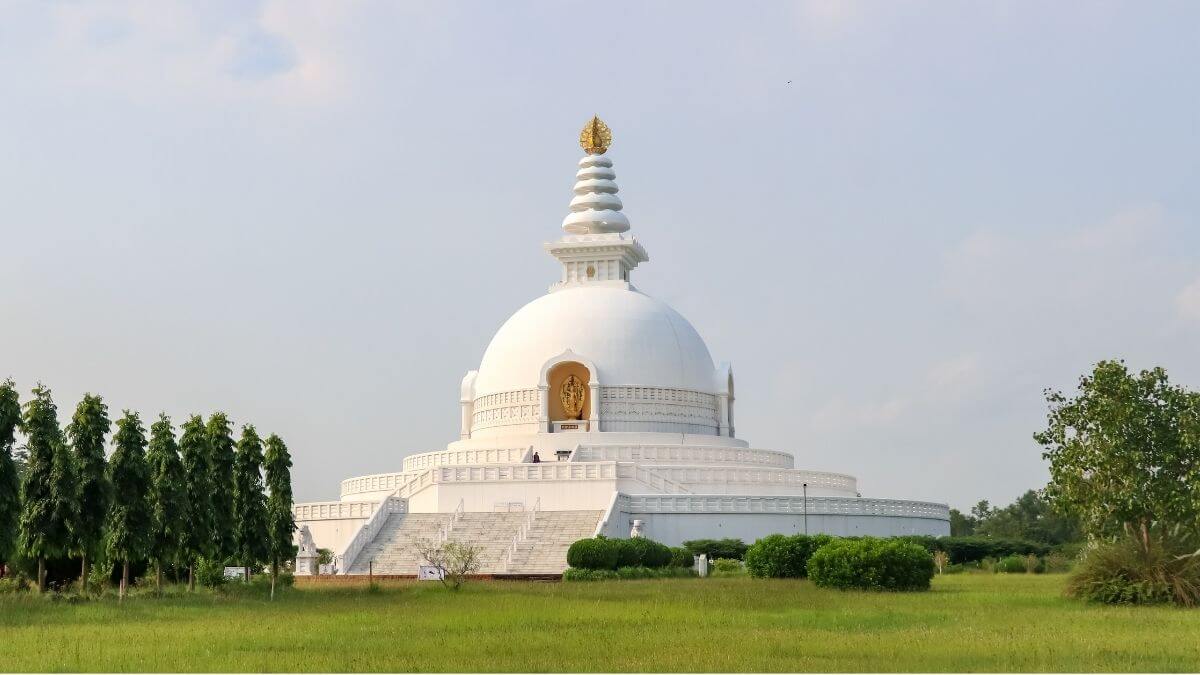
6. Lumbini: Birthplace of Buddha
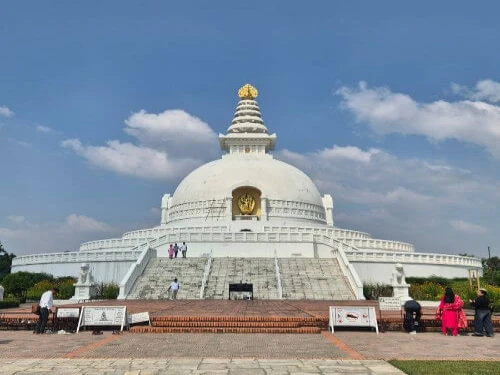
Lumbini is quiet, spiritual, and perfect for exploration. This is where Siddhartha Gautama, the historical Buddha, was born in 563 BCE, and it is one of the most significant pilgrimage sites in the world for Buddhists.
The site is anchored by the Maya Devi Temple, built around the exact spot of the Buddha's birth. Excavations have revealed brick structures dating back to the 3rd century BCE, including a marker stone placed by Emperor Ashoka, who visited and erected a pillar here around 249 BCE. That Ashokan Pillar still stands at the site. Entry to the Maya Devi Temple requires removing shoes and keeping silence; the atmosphere inside is genuinely moving even for non-religious visitors.
The Sacred Garden surrounding the temple is beautifully maintained, with a sacred pond (Puskarini) where Maya Devi is said to have bathed before giving birth. The Eternal Flame nearby has burned since the site was redeveloped in the 1970s.
Beyond the sacred core, the Lumbini Development Zone is divided into two zones: the East Monastic Zone (Theravada tradition) and the West Monastic Zone (Mahayana and Vajrayana traditions). Monasteries from Japan, China, Myanmar, Korea, Germany, Thailand, and over 20 other countries are each built in their own national architectural style, creating a genuinely unique cross-cultural landscape unlike anywhere else in Nepal.
Rent a bicycle for a day and cover everything at your own pace. Flat, well-marked, meditative. Fly from Kathmandu to nearby Bhairahawa (Gautam Buddha International Airport), about an hour away, and take a local bus or taxi the remaining 22 km to the site.
Budget note: Accommodation ranges from basic guesthouses to the more comfortable hotels near the Lumbini Garden. Most of the monastery gardens are free to enter; the Maya Devi Temple has a small entry fee.
7. Bhaktapur: Living Medieval City
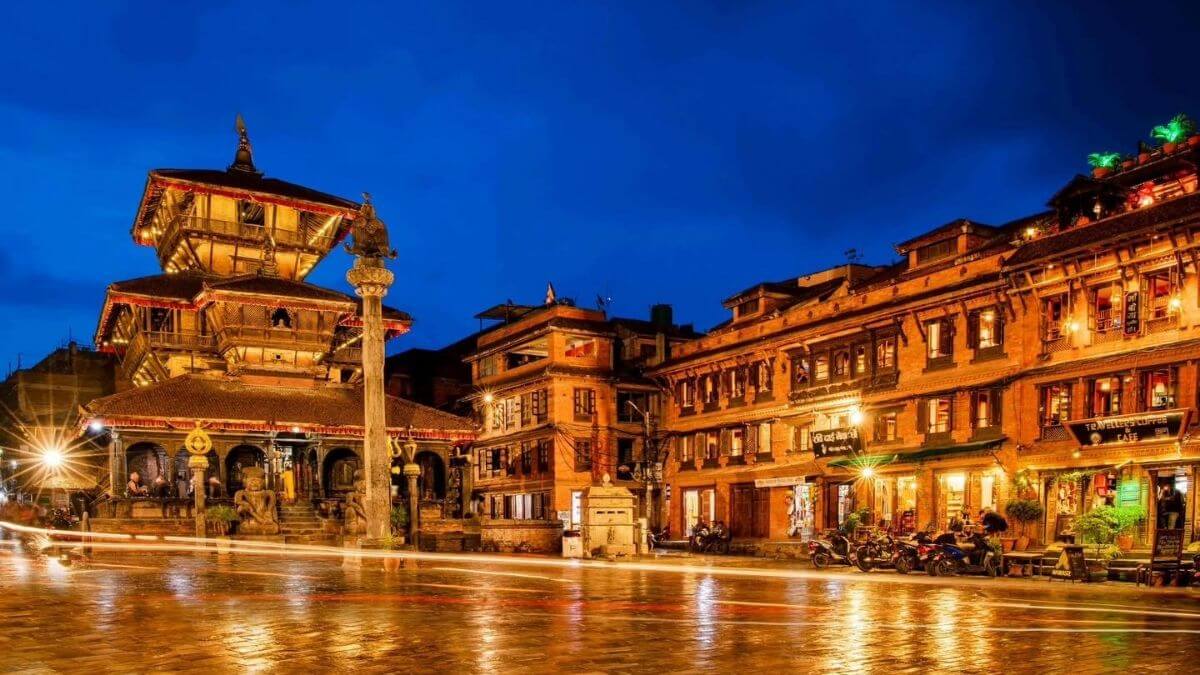
Bhaktapur feels like an entirely different world from Kathmandu. Known as the "City of Devotees," the old city, including Durbar Square, Taumadhi Square, and Pottery Square, is compact, walkable, and deeply atmospheric.
Bhaktapur Durbar Square is the historic royal palace complex, containing the 55-Window Palace (built in 1427, famous for its intricately carved wooden windows), the Golden Gate (considered the finest example of repousse art in Nepal), and the National Art Gallery. The square was badly damaged in the 2015 earthquake, and ongoing restoration by German and Nepali conservators has been carefully documented and praised internationally.
Taumadhi Square, a short walk from Durbar Square, is home to the Nyatapola Temple, the tallest temple in Nepal at five stories, and the Bhairabnath Temple. The Nyatapola was built in 1702 and is one of the few structures that survived the 2015 earthquake completely intact, a testament to its original engineering. The square is lively with local vendors, potters, and street food stalls.
Pottery Square (Talako Tol) is the city's traditional potters' quarter, where artisans still shape and sun-dry clay pots using centuries-old methods. In the morning, the square fills with rows of drying pottery. Watching the process is free; buying a small handmade piece costs almost nothing.
Early mornings here are something genuinely special. Entry costs around $15 but is worth every rupee. Stay overnight to experience it after day visitors leave; it's only 13 km from Kathmandu.
Practical tip: Bhaktapur's entry fee is valid for multiple days, so if you stay overnight, you can explore at your own pace over two days without repaying. The guesthouses inside the old city walls are notably quieter and more characterful than those outside.
8. Rara Lake: For the Adventurous Traveler
Rara Lake is not for everyone. Remote, effortful, and requires comfort with real wilderness. But if you want something truly untouched, it's extraordinary. Located in the Mugu district of far western Nepal at an altitude of 2,990 meters, Rara Lake is the largest lake in the country, approximately 10.8 km long and 5 km wide, deep blue, crystal clear, and surrounded by pine, fir, and juniper forests with snow-capped peaks above. The water color shifts from deep sapphire in the morning to turquoise and silver as light changes throughout the day. You often get the landscape almost entirely to yourself.
Rara National Park, which surrounds the lake, is one of Nepal's smallest national parks by area but one of the most biodiverse in the west. It is home to red pandas, Himalayan black bears, musk deer, and over 200 bird species, including rare species like the crimson-horned pheasant. The forests are dense and largely undisturbed.
Fly to Talcha Airport (IATA: RHP), which receives small Twin Otter flights from Nepalgunj (connected to Kathmandu). Flights are weather-dependent, and cancellations are common; build flexibility into your itinerary. From Talcha it is a trek of 2–3 days to reach the lake. Alternatively, some trekkers do the full overland approach from Jumla, which adds significant time but rewards with an extraordinary landscape.
Permits required: Rara National Park entry permit (NPR 3,000 for foreign nationals as of 2025) plus TIMS card. A licensed guide is strongly recommended given the remoteness. Not budget-friendly, but nothing else on this list comes close.
9. Ghorepani Poon Hill Trek: Best Short Trek in Nepal
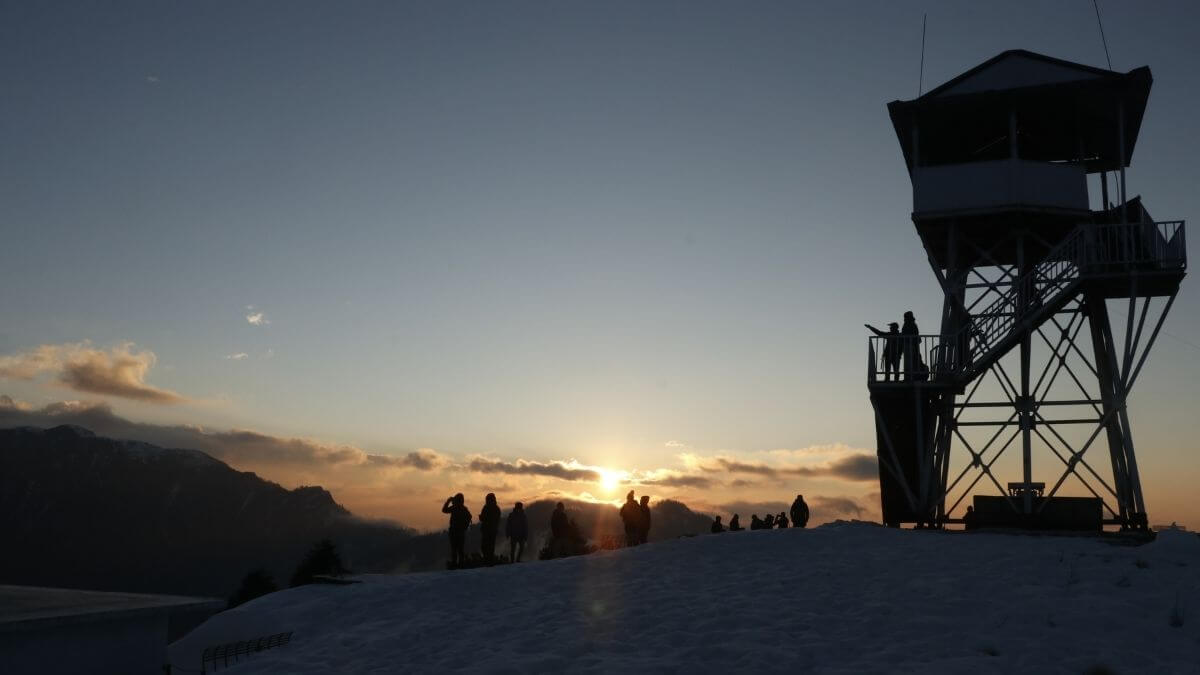
Ghorepani Poon Hill is the most iconic short trek in Nepal and one of the best introductions to Himalayan trekking anywhere in the world. It sits in the Annapurna Conservation Area, south of the main Annapurna Circuit, and combines spectacular mountain scenery with dense rhododendron forests and traditional Gurung and Magar villages.
The trek typically takes 4–5 days from Nayapul (a short drive from Pokhara) and gains a maximum elevation of around 3,210 meters at the Poon Hill viewpoint. The early morning ascent to the viewpoint (about 45 minutes from Ghorepani village, starting before dawn) delivers one of the most celebrated sunrise panoramas in Nepal: Dhaulagiri, Annapurna South, Hiunchuli, Machhapuchhre (Fishtail), and Annapurna I, all visible at once, with the sky turning amber behind the peaks as light breaks.
The trail passes through dense rhododendron forest that explodes into red and pink blooms in March and April, one of the most visually striking trekking experiences in Nepal during spring season. Villages along the route, particularly Ghorepani and Tadapani, are well-equipped with teahouses offering hot meals and comfortable lodging at reasonable prices.
Sir Edmund Hillary reportedly called the view from Poon Hill one of the finest in the Himalayas, a claim that's easy to understand once you've stood there at sunrise.
- Permits required: TIMS card and ACAP (Annapurna Conservation Area Permit). Both are obtainable in Pokhara before departure.
- Difficulty: Moderate. Suitable for first-time trekkers with a reasonable level of fitness. No technical climbing involved.
10. Mustang: The Forbidden Kingdom
Mustang is unlike anywhere else in Nepal. Tucked behind the Annapurna range, this high-altitude desert region feels more like Tibet than Nepal, with stark landscapes, ancient cave monasteries, and mud-brick villages frozen in time.
- Lo Manthang, the walled capital of Upper Mustang, is the crown jewel. Walking through its centuries-old alleyways and gompas feels genuinely otherworldly.
- Getting there: Fly from Pokhara to Jomsom, then trek or drive further in.
- Permits (2026): Upper Mustang requires a Restricted Area Permit (which used to be ~$500 for 10 days but now changed to the number of days you stay and groups of at least two (recently changed to 1) with a licensed guide. Lower Mustang is permit-free and far more budget-friendly and still stunning, just more accessible.
If you want something truly remote and culturally unlike anything else on this list, Mustang is worth every rupee.
Don’t just read about these places; start your Nepal trip today. Contact Abound Holidays now and get everything planned for you.
Best Time to Visit Nepal in 2026
The best time to visit Nepal is October and November, with clear skies, perfect trekking conditions, and pleasant temperatures across the country. That said, every season has something to offer depending on what you're after.
- Spring (March to May): A wonderful time for trekking and sightseeing, with blooming rhododendrons literally everywhere! The weather is warm, the skies are clear, and the mountain views are at their best and clearest.
- Autumn (September to November): The most popular season for travel, with clear skies, pleasant temperatures, and breathtaking mountain views. It’s perfect for trekking, adventure sports, and cultural exploration.
- Winter (December to February): While higher-altitude treks can be challenging due to snowfall, winter is great for cultural experiences and lower-altitude hikes. Cities like Kathmandu and Pokhara are less crowded at this time, making exploration more peaceful.
- Summer/Monsoon (June to August): If you don’t mind occasional rain, this is an excellent time to explore vibrant landscapes and quieter destinations. The monsoon transforms Nepal’s hills into a green paradise, ideal for visiting wildlife in their rawest form of livelihood.
At the end of the day, Nepal has something to offer year-round. The best time is simply whenever you can go.
Final Thoughts
Nepal is one of those places that stays with you long after you leave. The mountains are bigger than you expect. The people are kinder than you'd hope. And travel here, done thoughtfully, is genuinely one of the most rewarding ways to experience a country. You don't need to have everything figured out before you go. Book your first couple of nights, land in Kathmandu, and let things unfold from there. The travel community in Nepal is well-established and friendly; you'll find your rhythm fast.
Whether you're here for two weeks or two months, the best places for travel in Nepal will give back as much as you put in. Go slow when you can. Talk to people. Eat the dal bhat. Trek the trail you weren't sure you were ready for. At the end of the day, that's what travel is actually about trusting yourself a little more than you did before you left. Nepal has a way of making that happen.
You’ve seen the places; now it’s your turn to experience them. Start planning your Nepal trip today and make it happen. Contact us today!
FAQs on 10 Travel Destinations in Nepal 2026
How much does budget travel in Nepal cost per day?
Around $25–40 per day in cities. On trekking routes, budget $25–45 per day, including food, accommodation, and permits.
Do travelers need a guide for trekking in Nepal?
Not always. Routes like Ghorepani, Poon Hill, and Pikey Peak are open to independent trekkers. However, Upper Mustang and Manaslu require groups of at least two with a licensed guide.
What are the best things to do alone in Nepal?
Paragliding in Pokhara, exploring Kathmandu's temples, jungle safaris in Chitwan, cycling around Lumbini, and watching sunrise from Poon Hill are all great activities.
How do I find trekking partners as a traveler in Nepal?
Check notice boards in Thamel cafés and Lakeside Pokhara. Many guesthouses also help connect travelers heading the same direction.
What permits do I need for trekking in Nepal in 2026?
Ghorepani Poon Hill requires a TIMS card and ACAP permit. Restricted areas like Upper Mustang need special permits and a licensed guide. Always confirm requirements before your trek.
Is Nepal good for first-time travelers?
Absolutely. Nepal has well-established tourist infrastructure, helpful locals, and beginner-friendly destinations like Pokhara and Kathmandu that are very easy to navigate alone.
What should I pack for travel in Nepal?
Light layers, trekking shoes, a daypack, offline maps, cash, a local SIM card, and basic first-aid supplies. Add altitude sickness medication if trekking above 3,000 meters.



 based on 3 reviews